Thursday, 9 July 2020

HiFly converts A380 from passenger to freighter

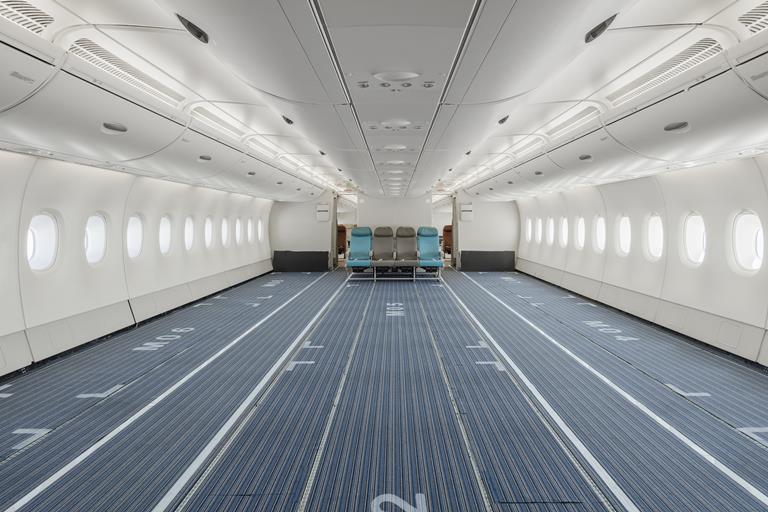
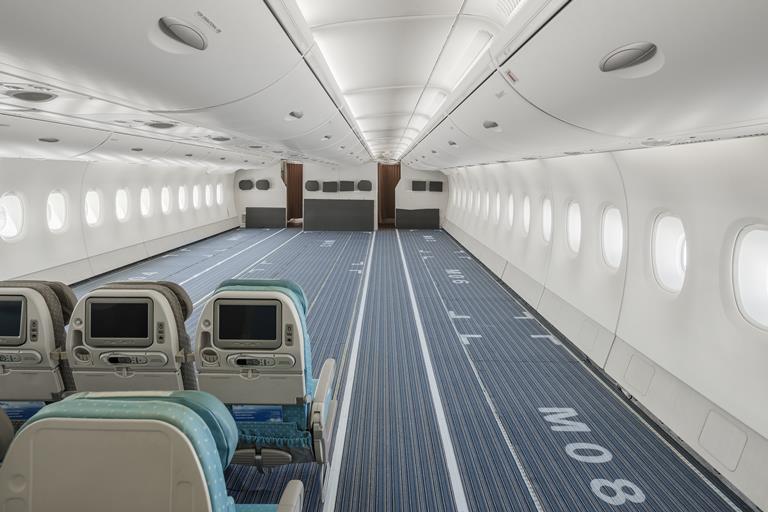
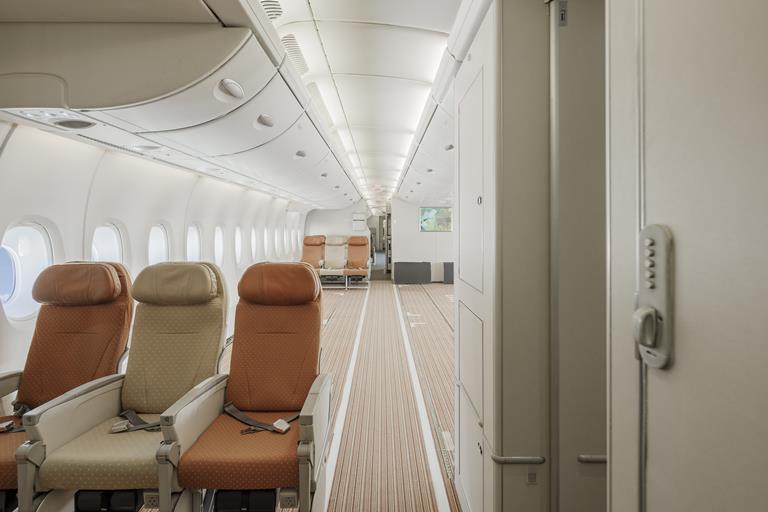
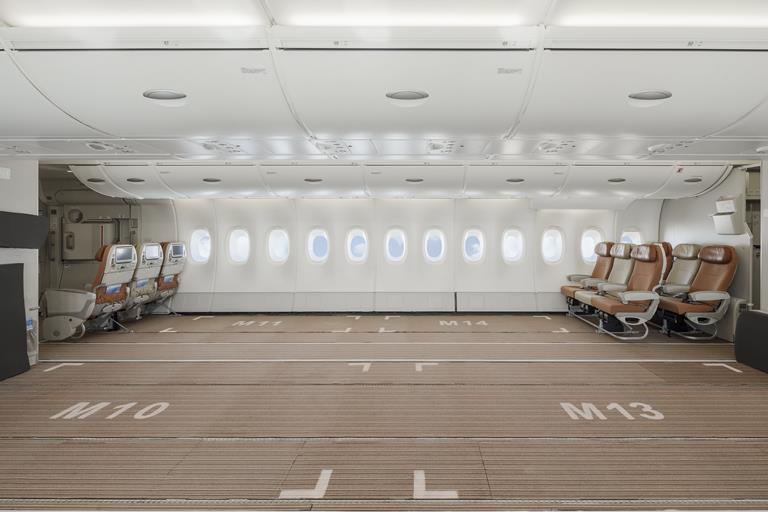
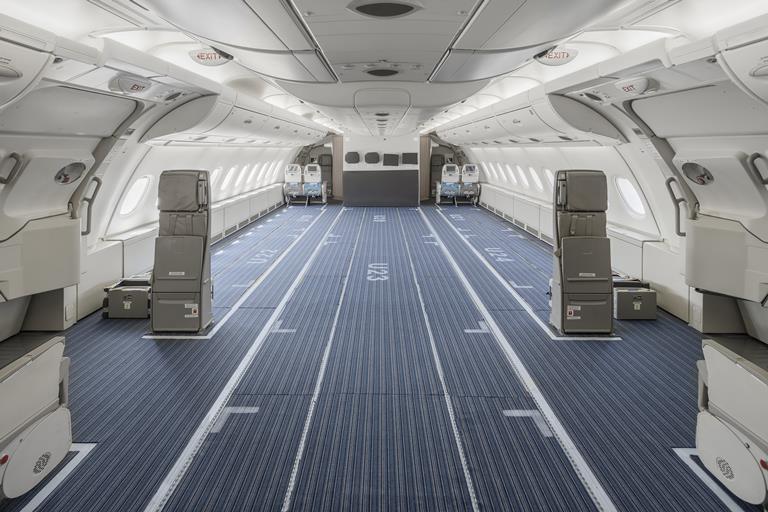
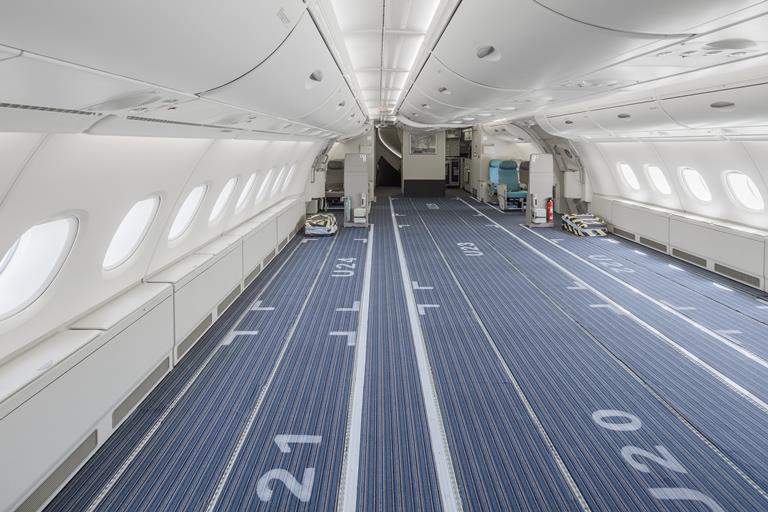
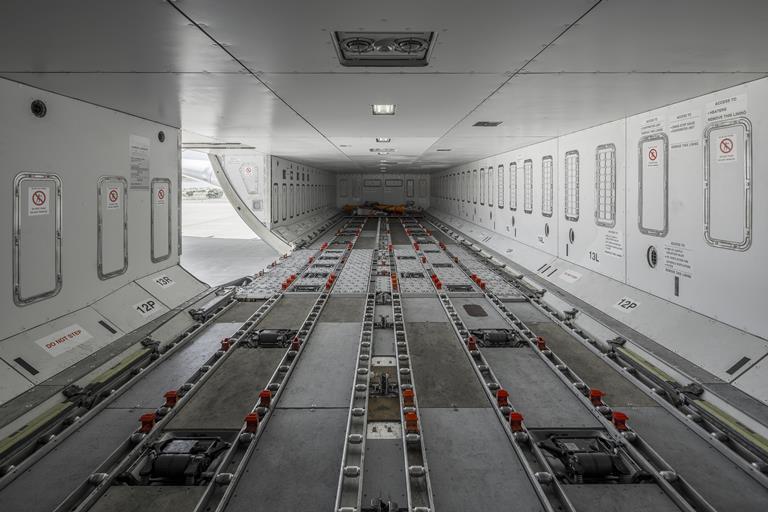
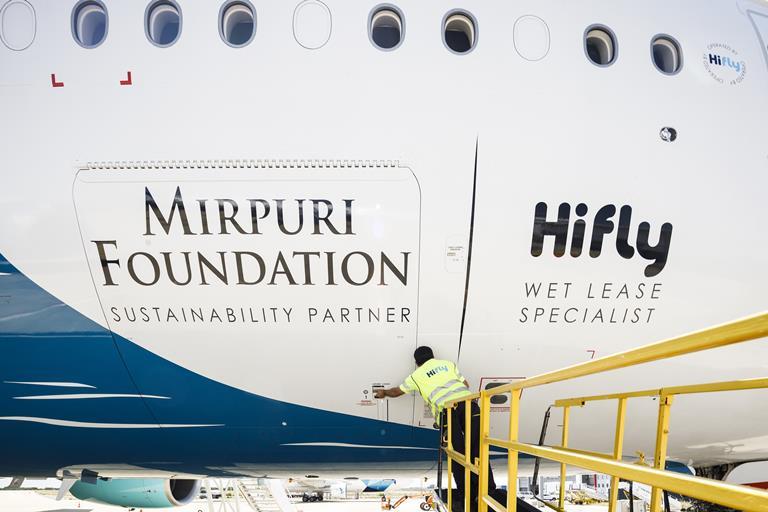
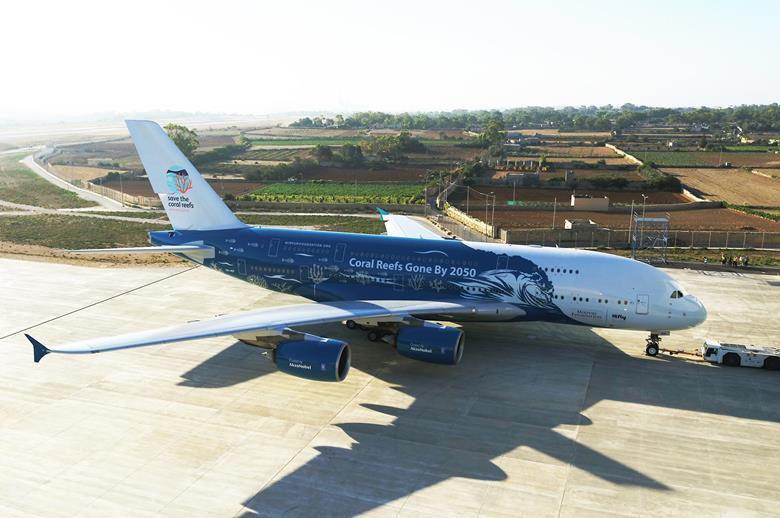
European wet-lease operator Hi Fly has brought into service a freight-optimised Airbus A380, which has been temporarily converted from passenger configuration in a project overseen by Lufthansa Technik. The German MRO and modification specialist was responsible for technical and engineering support, Hi Fly says of the project, while the work was executed by Hi Fly’s line maintenance provider Mesa at its Lisbon facility. The economy-class seats have been removed from the former Singapore Airlines widebody, which means the superjumbo can carry “close to 60 tonnes of cargo”, Hi Fly says. With the seats removed, pallets can be fitted to the seat tracks.


Source: Hi Fly


Source: Hi Fly

Source: Hi Fly

Source: Hi Fly

Source: Hi Fly

Source: Hi Fly

Source: Hi Fly

Source: Hi Fly

The aim is to tap “high [air freight] demand during the Covid-19 crisis”, the carrier states. Lufthansa Technik said in May that it had been awarded the technical and engineering task to support the “operational change” for the double-deck type, but did not name the customer. Hi Fly notes that the modification is temporary and complies with passenger-to-freight regulatory exemptions drawn up to meet demand during the coronavirus crisis. Lufthansa Technik says that it will also offer the conversion as a permanent solution. The project marks the emergence of A380s for freighter work some 13 years after a dedicated A380 freighter programme was effectively halted by a withdrawal of customer interest. With many operators of the A380 either removing the aircraft from their fleets or putting them into long-term storage, this year could see renewed interest in a freighter configuration of the type.

Source: Hi Fly

Of the A380’s potential in that regard, Henning Jochmann, Lufthansa Technik’s aircraft modification base maintenance senior director, told Flight Global in early June: “At the moment the oil price is very good, and there are logistical limitations, but I expect to see more A380s on the market.” Hi Fly’s A380 features the special “Save the Coral Reefs” livery that it unveiled at 2018’s Farnborough air show. The aircraft has since provided passenger services for airlines including Air Austral, Air Madagascar, Norwegian and the now-defunct Thomas Cook. The Hi Fly brand is operated by two airlines: one based in Portugal and the other in Malta.


Full story and photos sourced from here 
https://www.flightglobal.com/fleets/hi-fly-confirms-lht-oversaw-a380-freighter-conversion/139202.article

Tuesday, 7 July 2020

Virgin Australia is set to soar - Tigerair set to close

                                                                                                     File Photo


Just two months shy of its 20th birthday, Virgin Australia hands over the keys to Bain Capital.
The US-based global investment giant, anointed by airline-appointed administrator Deloitte on the back of a multi-billion dollar bid, is now in the cockpit.  Bain intends to accelerate Scurrah’s own pre-pandemic plan, which he’s often described as “turning a great airline into great business.”
Some of that was set in motion as the coronavirus shockwaves hit: like shutting down the budget Tigerair arm, 

TIGER AIR A320-232 VH-XUH (CN 6749)            File Photo


closing the New Zealand crew bases, and replacing the Airbus A330 and Boeing 777-300ER jets with a single fleet. Bain has adopted much of Scurrah’s plan and is adapting more of it to suit the times, with the necessary downsizing becoming more a matter of essential rightsizing in the face of the dramatically reshaped travel landscape. The scene continues to prove a highly fluid one. Within the space of the past 24 hours Melbourne cancelled all international flights following a surge in coronavirus infections; Queensland announced it would reopen its borders from July 10 to visitors from all across Australia except for Victoria; and South Australia abandoned a previous decision to open its eastern borders to NSW and Victoria as of July 20. Bain’s blueprint for Virgin Australia 2.0 will recast the airline as a leaner ‘value-based’ player with a dash of that on-brand Virgin flair, and straddling the middle of the market rather than entering a dogfight with Jetstar in the budget space or going head-to-head with Qantas as a full-service airline for corporate travellers.

VIRGIN AUSTRALIA B777-3ZG VH-VOZ (CN 35302)        File Photo 


The airline will move to an all-Boeing 737 fleet, with far fewer planes.

Bain’s local managing director Mike Murphy has said he expects the sweet spot for relaunching Virgin to be around 60-70 planes, close to half of the current total fleet, with the suggestion that there’ll be enough fat in the reduced schedule to have some jets on hand to ensure a high reliability of service should technical issues occur. Fewer planes means fewer flights, with Bain set to axe some routes and in other cases trim the frequency of services, while focussing on the busiest and most profitable routes such as the 'golden triangle' between Brisbane, Sydney and Melbourne.


Full story sourced from here

Monday, 6 July 2020

Boeing to stop production of the 747 Jumbo

BOEING 747-8 N6009F 


Following on from yesterdays story about QANTAS saying goodbye to its last Jumbo 747, there are rumours Boeing has announced it will stop making 747 Jumbo Jets for good after it completes the last of the 16 aircraft currently on order now. The final 747 is expected to roll off the line in the next two years or so, after which time the type will have been in production for more than five decades. The impacts that the COVID-19 pandemic has had across the air travel and aviation industries have only further depressed an already declining market for the iconic plane, which is lovingly nicknamed the "Queen of the Skies." Boeing has, so far, declined to confirm or deny that it has made any final decision about the future of the Jumbo Jet. The Chicago-headquartered plane-maker has reportedly not yet informed workers at its plant in Everett, Washington, near Seattle, where the latest version of these aircraft, the 747-8 variant, is assembled, about any upcoming changes. The facility in Everett, which has been responsible for pumping out finished 747s since the end of the 1960s, remains the largest building by volume in the world. "At a build rate of half an airplane per month, the 747-8 program has more than two years of production ahead of it in order to fulfill our current customer commitments.  As it stands now, Boeing has orders for 16 747-8F freighters, including an order for 12 from global logistics firm UPS.

Sunday, 5 July 2020

Qantas Boeing 747 farewell flights for Sydney, Brisbane and Canberra


QANTAS B747-438 VH-OEJ (CN 32914) 


Get ready to make your fond farewell to the Qantas Boeing 747, because these scenic joy flights will sell out fast!

Qantas will give fans of the Boeing 747 the opportunity to take one last trip on the much-loved jumbo jet before the iconic 'Queen of the Skies' heads into retirement. The Boeing 747s were set to retire at the end of this year, but the coronavirus-triggered travel slump has seen all but one red-tailed jumbo already put out to pasture. Responding to overwhelming demand, Qantas has moved to give the Boeing 747 a fitting finale with a series of hour-long scenic 'Jumbo Joy Flights' to take place in Sydney, Brisbane and Canberra on the following dates:
  • Sydney: Monday 13th July  
  • Brisbane: Wednesday 15th July 
  • Canberra: Friday 17th July 
Tickets for these Boeing 747 'farewell flights' will go on sale through the Qantas website on Tuesday July 7 (no, we don't yet know exactly when) at the following rates:
  • business class: $747
  • economy class: $400  
As with previous similar Qantas flights, there'll be enough spare seats left unsold so that passengers can enjoy the view as well as a little extra elbow-room. The Boeing 747's premium economy cabin will be reserved for Qantas employees, who were this afternoon advised of plans for these special flights. Qantas says the flights will operate on a 'cost-recovery' basis and any profits will be donated to the HARS Aviation Museum in Sydney and the Qantas Founders Museum in Longreach "to help preserve and promote the 747 legacy for future generations."

QANTAS B747-338 VH-EBV (CN 23224)


Qantas has flown the Boeing 747 for almost 50 years, beginning with the 747-200 model, which entered Qantas’ fleet in 1971. With a sprawling economy class cabin, the Boeing 747 helped democratise international air travel, while literally elevating first class to another level thanks to the upper deck's exclusive Captain Cook lounge where first class passengers could mingle, dine, relax, drink, and even smoke.  Qantas also introduced the world's first 'business class' cabin – in name, if not in concept – on the Boeing 747 in 1979, carving out a new level of comfort and service between the luxury of first class and the entry-level economy class experience. Ten years later, in 1989, Qantas took delivery of the Boeing 747-400: boasting globe-striding range, it set a world record for the longest non-stop flight with a 20 hour marathon trek from London to Sydney (take that, Project Sunrise).

QANTAS B747-438 VH-OEF (CN 32910) 


After decades serving as the flagship of the Flying Kangaroo and dominating international routes to the USA, London, Europe and Asia, the Boeing 747s were steadily replaced by the larger Airbus A380 and the more modern mid-sized Boeing 787-9 Dreamliner.
Boeing stopped producing the 'classic' Boeing 747-400 in 2005, and is now preparing to bring down the curtains on the stretched 747-8 series.

This last member of the Qantas Boeing 747 fleet (VH-OEJ - CN 32914), which ironically was the last 747-438 QANTAS received, is scheduled to leave Sydney for Los Angeles, (and then onwards to the infamous Mojave 'boneyard' where her siblings await) on Wednesday the 22nd July. 


Story sourced from here (photos are mine)

Saturday, 4 July 2020

The reason Some Boeing 737 Cockpits had Eyebrow Windows

QANTAS B737-476 VH-TJI (CN 24434)


The so-called “eyebrow windows” were eliminated from Boeing’s cockpit designs in 2004 after their function was made more or less obsolete due to the progress of modern avionics. But why exactly were they installed in the first place? On older Boeing 737s, manufactured up until the early 2000s, the cockpit is equipped with a couple of small extra windows, located diagonally above the pilots’ heads. These were given the nickname “eyebrows” due to their anatomically corresponding placement above the main front windows. These four little windows were present on all of the earlier Boeing models, such as the 707 and the 727, and remained part of the 737 up until 2004. While they are no longer a standard feature, they are still available upon customer request. These windows allowed for better visibility in tight turns, for example, during a visual approach to a runway. They could also help pilots in better spotting other aircraft that could be on a potential collision course. There is also the idea circulating that they were to offer a better view of the sky if navigation by stars was required. However, this latter raison d’être does not really make much sense. Astral navigation would require pilots to see a much bigger part of the sky than what is possible through the small “eyebrows.” However, there are aircraft that have such windows, like older versions of the 747. They are located on top of the plane, as you need to be able to stand up and use what is known as a sextant. This is an instrument that, simplified, measures the angle between a celestial body and a horizontal line of reference. The eyebrow windows were mostly a concession to the FAA, which expressed concerns that the extra visibility was essential during the process of certifying early models of Boeing’s aircraft. After more research, feedback, and of course, the progression of modern avionics, Boeing decided that the windows did not really serve much of a purpose anymore. So, it altered the production of new planes to leave them out and made plugs for the older models to be fitted in the spaces where the windows used to be. Airplane windows have heavily regulated maintenance intervals. Removing just these four small windows reportedly saves around 300 hours of maintenance over the lifetime of the aircraft. It also reduces, albeit not to any great extent, drag, thus contributing to a slightly better fuel economy. The windows were no longer needed for visibility, as navigational systems became more sophisticated. The certification of the Traffic Collision Avoidance System (TCAS) in the late 1980s also rendered the spotting-oncoming-traffic function of the windows obsolete. They also entailed a bit of a nuisance for the occupants of the cockpit. When the sun was high in the sky for longer periods, for example, during the summer months, it would shine right in on the foreheads of the flight crew. Often, the pilots would fill the windows with check-lists or other documents to keep the light out, as the windows served no purpose during regular flight.  They weren’t of use anymore, they were more of a bother than anything else, and removing them saved maintenance hours. As such, they were rendered obsolete. So you will hardly ever see the eyebrow windows on commercial aircraft anymore. However, you can still glimpse them on the military variants of Boeing jets, as they require that extra fraction of visibility in potentially more extreme maneuvers.
While on windows - Have you ever wondered if aircraft cockpit windows can be opened? The simple answer is yes, when on the ground, for many aircraft types. This is mainly for emergency use but serves a few other purposes too. On many aircraft types, the side windows in the cockpit can be opened. The main reason for this is not for ventilation or vision; it is related to aircraft safety law. All aircraft should have a secondary exit available from the cockpit, to be used if the cabin door (and hence the main fuselage emergency exits) cannot be used. On some aircraft, including the Boeing 747 and the newer Boeing 787 and Airbus A350, this exit requirement is met by installing a hatch in the cockpit ceiling. Pilots (and other personnel in the cockpit) can exit the aircraft through the hatch, and descend to the ground using ropes. On most other aircraft, this requirement is met with opening windows. The Airbus A320 family, A330, A340, and A380 all have opening windows, as does the Boeing 737 family, the 757, 767, and the 777. A panel near these windows usually contains an escape rope. This is thrown out of the window to aid descent to the ground.


Friday, 3 July 2020

Remembering Iran Air Flight 655

Iran Air Flight 655 was a scheduled passenger flight from Bandar Abbas Airport (BND/OIKB), Iran to Dubai Airport (DXB/OMDB), United Arab Emirates and was shot down on the 3rd July 1988 by an SM-2MR surface-to-air missile fired from USS Vincennes, a guided-missile cruiser of the United States Navy. The aircraft, an Airbus A300, was destroyed and all 290 people on board were killed. The jet was hit while flying over Iran's territorial waters in the Persian Gulf, along the flight's usual route, shortly after departing Bandar Abbas International Airport, the flight's stopover location. The incident occurred during the final stages of the Iran–Iraq War, which had been continuing for nearly eight years. Vincennes had entered Iranian territory after one of its helicopters drew warning fire from Iranian speedboats operating within Iranian territorial limits. Prior to departure the crew received an enroute clearance to Dubai via the flight planned route A59 and A59W at FL140. The flight took off from runway 21 at 10:17 hours and climbed straight ahead. Two minutes later, the crew reported leaving 3500 feet for FL140 on Airway A59, estimating MOBET at 06:53 UTC (10:23 Iran time). At 10:24:00 the aircraft passed MOBET out of FL120. At 10:24:43 the Airbus was hit by surface-to-air missiles. The tail and one wing broke off as a result of the explosions. Control was lost and the aircraft crashed into the sea. The missiles were fired by the US Navy cruiser USS Vincennes. It was operating in the area together with the frigates USS Elmer Montgomery and USS John H. Sides. They were to protect other ships in the area. At about the time the Airbus took off, the radar aboard the USS Vincennes picked up a brief IFF mode 2 response, which led to the mistaken identification of the Airbus as a hostile F-14 aircraft. The USS Vincennes issued 7 challenges on the Military Air Distress (MAD) frequency 243 MHz, addressed to 'Iranian aircraft', 'Iranian fighter' or 'Iranian F-14'. These messages were followed by three challenges on the IAD (International Air Defence) radio frequency. Due to increasing tension in the area - on May 17, 1987 an Iraqi Mirage had attacked USS Stark - all aircraft in the area had to monitor 121.5 Mhz: the International Air Defence - IAD radio frequency. There was no response. Meanwhile radar operators were monitoring the Aegis screens. They reported that the incoming plane was descending with an increasing speed. In fact, the Airbus was climbing. Considering itself and USS Montgomery under aggression, USS Vincennes took the ultimate decision to launch missiles against the perceived hostile target at 10:24:22. It remains uncertain whether the IR655 flight crew (only able to monitor the IAD, not the MAD frequencies) would have been able to rapidly identify their flight as the subject of the challenges made by the USS Vincennes. Of the 274 passengers 238 were of Iranian nationality, ten were nationals of India, one of Italy, six of Pakistan, thirteen of the United Arab Emirates and six of Yugoslavia. The 274 passengers comprised 209 adults, 57 children and eight infants. 1.2-2 The crew included the pilot, the co-pilot, the flight engineer and thirteen cabin crew members , All sixteen crew members were of Iranian nationality.


Aircraft Information
Airline: Iran Air
Code: IR/IRA
Aircraft: A300B2 -203
Registration: EP-IBU
Serial Number: 186
First Flew: 16/03/1982
Age at accident: 6Yrs 4 Mts

Wednesday, 1 July 2020

FAA Approves Test Flights Of Boeing's 737 Max Jet

Global aviation regulators grounded the 737 Max back in March 2019 after two fatal crashes involving Boeing 737 Max 8s.
Boeing started test flights of its 737 Max jet on Monday.  The Federal Aviation Administration told Congress over the weekend that it's given the go-ahead for its own pilots to test out the model for certification purposes.  Aviation authorities around the world grounded the 737 MAX in March 2019, following two crashes involving 737 Max 8 aircraft that left 346 people dead. Investigators believe issues with the model's automatic stall prevention system may have led to both accidents. Boeing's been working on a software update to fix that. But its recertification was slowed down as other technical problems were discovered during the jet's modification. The test flights will take place over multiple days. And the FAA cautioned lawmakers that those flights are just one step in its clearance process. Among other things, the agency still needs to approve Boeing's pilot-training program. Clearance from regulators in Europe and Canada will also be required.
Officials believe a stall-prevention feature automatically activated before the planes went down — this according to a new report out Friday. Anonymous sources told investigators that the Manoeuvring Characteristics Augmentation System, otherwise known as the MCAS, misfired right before the deadly crashes. The MCAS pulls the plane's nose down automatically if data says the nose's angle is too high. But if the sensor is wrong, the MCAS would force the nose of the plane down anyway — leading to a nosedive. The Journal says these preliminary findings are the first based on data from the plane's black boxes, and the information is subject to change. But it's even more evidence that the MCAS misfired in both the Ethiopian Airlines crash and a Lion Air crash last year.